Pyongyang's Latest Missile Tests Signal Defiance Ahead of Key Diplomatic Events
North Korea launched two short-range ballistic missiles on Sunday, with experts viewing the tests as a calculated signal ahead of the UN General Assembly and a Trump-Xi summit.
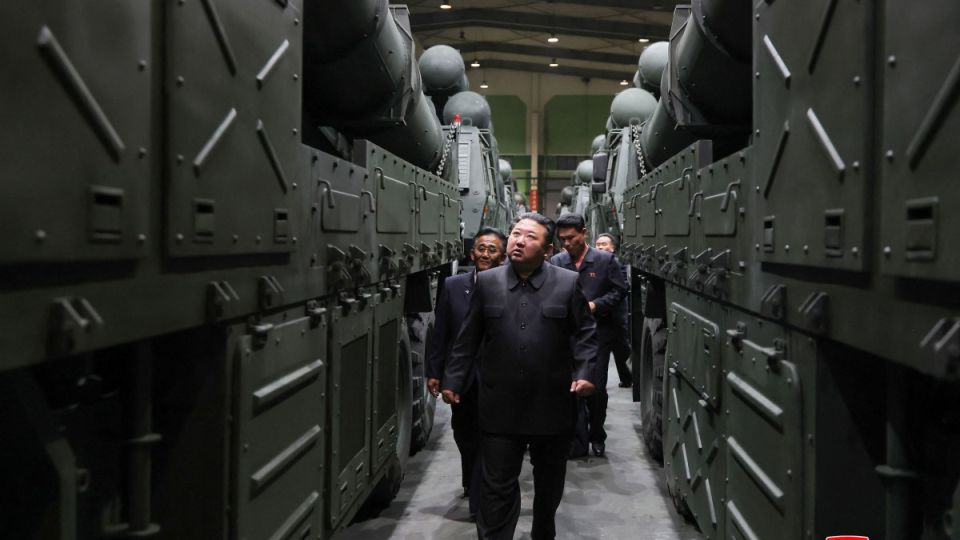
North Korea conducted two short-range ballistic missile tests on Sunday, a move analysts interpret as a deliberate message to Washington in advance of crucial international gatherings and amid growing talk of renewed diplomatic engagement.
The missiles were launched from Wonsan into the East Sea, with the first traveling approximately 450 kilometers around 3 p.m. and the second covering over 600 kilometers nearly three hours later, South Korea's Joint Chiefs of Staff reported.
The strategic timing of these launches has not gone unnoticed. They occurred just before the UN General Assembly convenes in New York on Tuesday and ahead of a scheduled meeting between US President Donald Trump and Chinese President Xi Jinping on Thursday.
South Korean President Lee Jae Myung plans to address the UN assembly, where he will outline his government's approach to achieving peace and stability on the Korean Peninsula. During last year's session, Lee presented his "E.N.D. Initiative," which emphasizes exchange, normalization, and denuclearization, with immediate priorities focused on stopping North Korea's advancement in nuclear and missile technology.
Experts suggest the missile tests represent Pyongyang's way of making clear it will not accept denuclearization as a precondition for negotiations and seeks recognition as a nuclear power in any future discussions with the United States.
The launches also precede the Trump-Xi summit, where North Korea may resurface as a topic of concern. During their May meeting in Beijing, China did not publicly confirm whether North Korea's nuclear ambitions were addressed, though Trump later stated the issue had been raised.
North Korea may be especially attentive to any signs that China, its primary ally and trading partner, continues to support the objective of a denuclearized Korean Peninsula.
With Trump repeatedly indicating openness to resuming talks with Kim Jong-un, speculation about renewed summit diplomacy has intensified. The weekend's missile tests could be Pyongyang's way of setting the terms for any future negotiations — specifically, that discussions should not center on abandoning its nuclear capabilities.
"North Korea has consistently launched missiles following criticism of military exercises involving South Korea, the United States, and Japan, often through statements from Kim Yo-jong and others," explained Yang Moo-jin, a distinguished professor at the University of North Korean Studies.
"The decision to fire short-range missiles into the East Sea seems designed to showcase its ability to strike targets in South Korea and US military installations while applying pressure on Washington before potential talks," Yang noted. "The timing also appears calculated to send a message at the UN General Assembly that denuclearization remains off the table."
The launches followed a warning from Kim Yo-jong, sister of North Korean leader Kim Jong-un, who condemned US-led Pacific Vanguard naval exercises two days earlier and threatened proportional or stronger countermeasures.
In recent weeks, Pyongyang has intensified its rhetoric against joint military drills involving South Korea, the United States, and Japan. Its previous ballistic missile launch on September 12 came one day after the three nations completed their trilateral Freedom Edge exercise.
As of Monday, North Korean state media had not acknowledged Sunday's launches. The Korean Central News Agency made no reference to the missiles, continuing an unpredictable pattern where Pyongyang sometimes opts not to publicize its weapons tests.
Three launches last month went unreported by state media, while the September 12 test was announced two days later as part of a joint firepower exercise involving artillery and missile units.
When questioned about the silence from Pyongyang, Seoul's Unification Ministry spokesperson Yoon Min-ho said Monday that the government would not read too much into it. "There have been multiple occasions when such launches went unreported, so we will not provide a separate evaluation," Yoon stated during a regular press briefing.
The US military downplayed any immediate danger from the latest tests while reaffirming defense commitments to the region.
"We are aware of the recent missile launches and are consulting closely with our allies and partners," US Pacific Command said in a statement posted Sunday. "Based on current assessments, these events do not pose an immediate threat to US personnel or territory, or to our allies. The United States remains committed to the defense of the US homeland and our allies in the region."
US Pacific Command has issued similar statements following previous North Korean missile launches this year, without explicitly condemning the actions.