Chinese Vice Minister Touts Anti-Fraud Progress at Phnom Penh Conference, Acknowledges Challenges Remain
China's Vice Minister of Public Security highlighted major arrests and cross-border cooperation in tackling online fraud at a Phnom Penh conference, while stressing that global scam networks remain a persistent threat requiring continued collaboration.
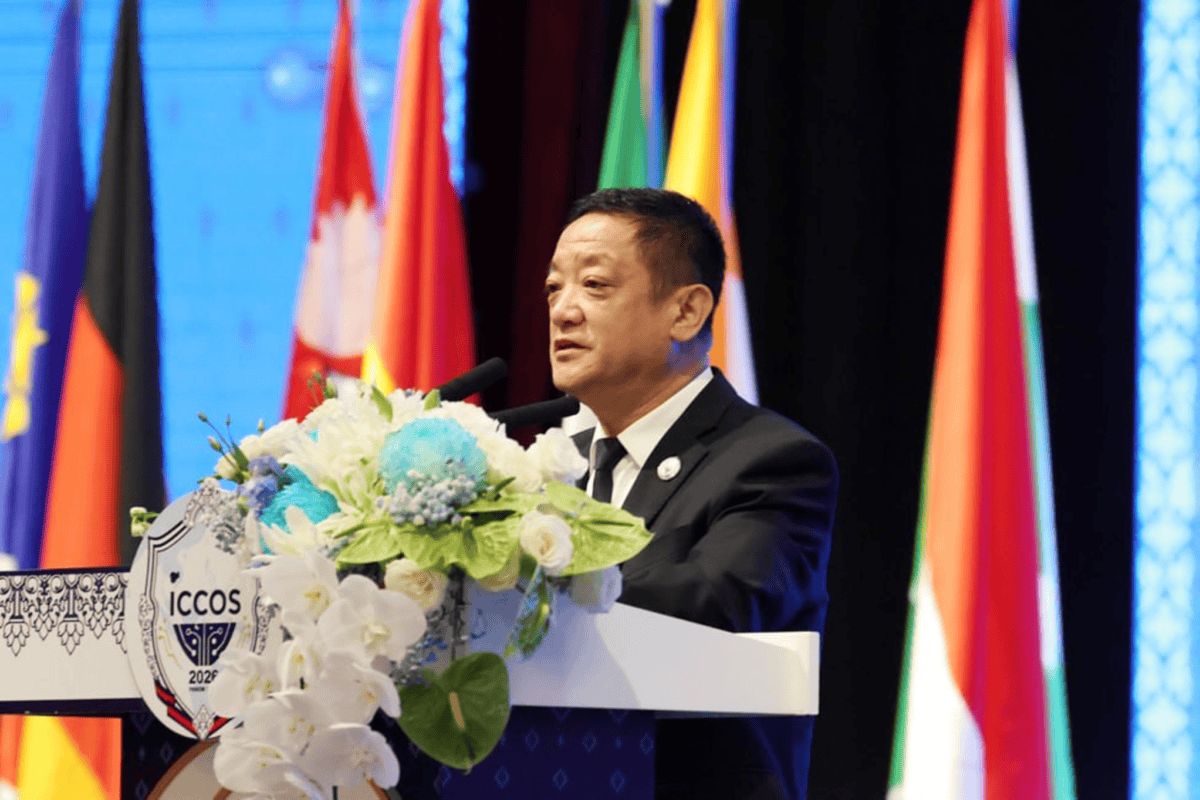
China's Vice Minister of Public Security, Yang Weilin, pointed to significant gains in the fight against telecom and online fraud during his address at the International Conference on Combating Online Scams (ICCOS) in Phnom Penh, while cautioning that the battle is far from over.
Yang told delegates that China is among the world's top victims of digital fraud, with hundreds of thousands of citizens swindled annually and losses running into the tens of billions of yuan. He stressed that Beijing has maintained a zero-tolerance stance toward fraud, deploying sustained domestic crackdowns while simultaneously pursuing cross-border enforcement.
"The situation of gambling and fraud crimes in Southeast Asia has markedly improved," Yang said, crediting bilateral and multilateral cooperation for dismantling scam compounds across the region.
High-Profile Arrests
Yang spotlighted several major figures apprehended through collaboration with Cambodian authorities:
- Chen Zhi, founder of Prince Group, was arrested and extradited to China in January over his alleged role in "pig-butchering" scams and illegal business operations. The United States seized roughly $14–15 billion in bitcoin connected to the scheme.
- Li Xiong, former chairman of Huione Group — a Cambodian financial conglomerate reportedly linked to Prince Group — was taken into custody and extradited in April.
- Liu Ren, who operated Jinbei Group, initially ran online gambling operations before pivoting to internet-based scams. He was arrested and deported to China in June.
Broader International Cooperation
Beyond Cambodia, Yang outlined a wide network of partnerships. Working with Myanmar, Chinese authorities helped dismantle the so-called "Four Major Families" criminal syndicates in the country's north. Joint Chinese-Thai police efforts also facilitated the extradition of figures such as She Zhijiang, which Yang described as a powerful deterrent.
He added that China has expanded cooperation with partners across Asia, Africa, Europe, and the Americas, including the UAE, Vietnam, Laos, the Philippines, Malaysia, Indonesia, Pakistan, Sri Lanka, Madagascar, Kyrgyzstan, the United States, and Spain.
Work Still Ahead
Despite the progress, Yang was candid about ongoing obstacles. Fraud networks continue to relocate across borders, and the black-market and gray-market industries that fuel them persist despite enforcement campaigns. The overall threat, he said, remains complex.
Yang urged the international community to resist politicizing the issue. "We must never politicize the fight against transnational crime, still less engage in stigmatization or confrontation," he warned.
He also praised Cambodia's own anti-fraud efforts, citing strengthened legislation, stricter law enforcement, anti-corruption measures, and deeper international collaboration. Through these steps, Yang noted, Cambodia has cleared large-scale scam compounds and facilitated the arrest and repatriation of tens of thousands of fraud suspects — results he said are visible to the entire international community.